
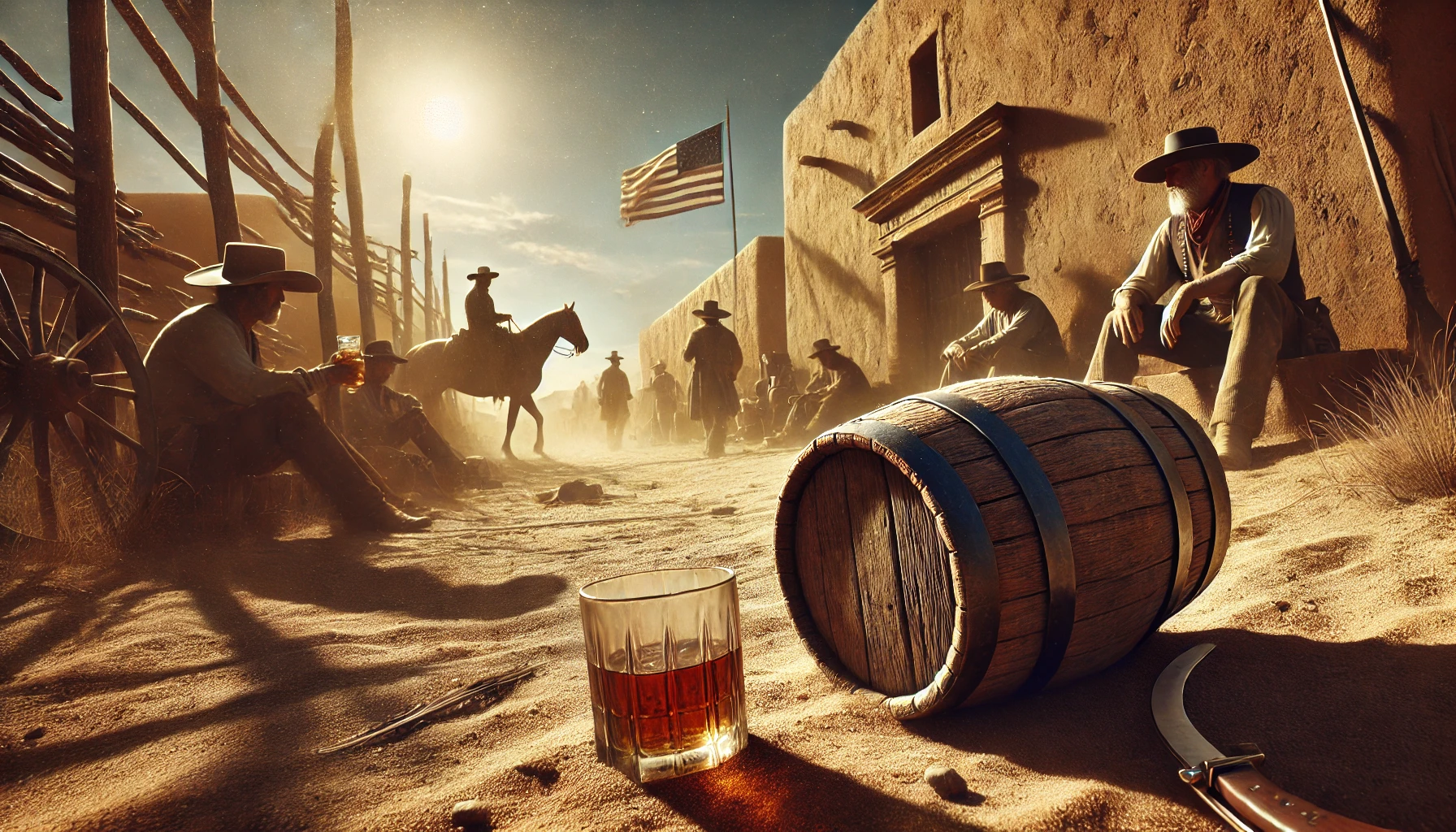
Chircahuas Sold A Barrel at the Gates
Presidio of Tucson, May 1856
Late sun; sweat
pulled from the pores
by the giant sweat-eating sky.
Slowly drying up
there, spirits and steel.
Under suicide glide of sun, fifty nearly dead
drunk on periphery of presidio. Whiskey
in wounded wood, barrel from back
where whiskey is born, brought on
wagon train to the edge, to the adobe
fortress under changing flags.
Dark liquor & dark lips.
Leather is a type of skin.
Barrel tastes like gunmetal,
like the fingers near the lips.
Sun-hot, glass made with lead,
oil dancing on the outskirts of water
Whiskey, well-sat in sun, burning
the gut, held in its skeleton racks;
the barrel bound in its metal straps.
Camped there along the Santa Cruz,
the Chiricahuas are sold a barrel, sold
a slow powder keg,
a weapon to dull the stories.
Alcohol—a way of negotiating,
sign language of fist and grimace.
Alcohol held in the gut
as the horizon grows dim.
About the poet Logan Phillips
Logan Phillips' poem "Chiricahuas Sold A Barrel at the Gates" vividly portrays a haunting historical moment on the harsh, sun-scorched frontier. Through rich, sensory imagery, Phillips captures the intersection of cultures, where whiskey becomes both a weapon and a bitter form of negotiation. The poem reflects on themes of colonialism, exploitation, and the human cost of survival under unrelenting desert skies.
To explore more about Logan Phillips, his bilingual work, and his contributions to poetry and performance art, visit his bio page on AZpoetry.com.
Explore More Featured Poems on AZpoetry.com
Summary
Set at the Presidio of Tucson in May 1856, the poem depicts Chiricahuas being sold a barrel of whiskey near the Santa Cruz, presenting alcohol as both commodity and instrument within a violent frontier encounter.
Analysis
Phillips makes the barrel the poem’s central object and repeatedly transforms it. It is wounded wood, a skeleton held together by metal straps, a container tasting of gunmetal, and ultimately a “slow powder keg.” Those descriptions collapse the distinction between alcohol and weapon. The landscape reinforces the pressure: heat pulls sweat from bodies beneath a consuming sky while an adobe fortress stands beneath “changing flags,” situating the encounter within shifting systems of territorial power. The final description of alcohol as a form of negotiation—expressed through “fist and grimace”—makes intoxication part of the poem’s depiction of coercion rather than escape from it.