
I overhear my porcelain teachers clink their teeth together like a toast
in celebration of their tongues,
proud to be so kind.
My father borrows a name so he can feed us.
I dream about what he was before he was illegal,
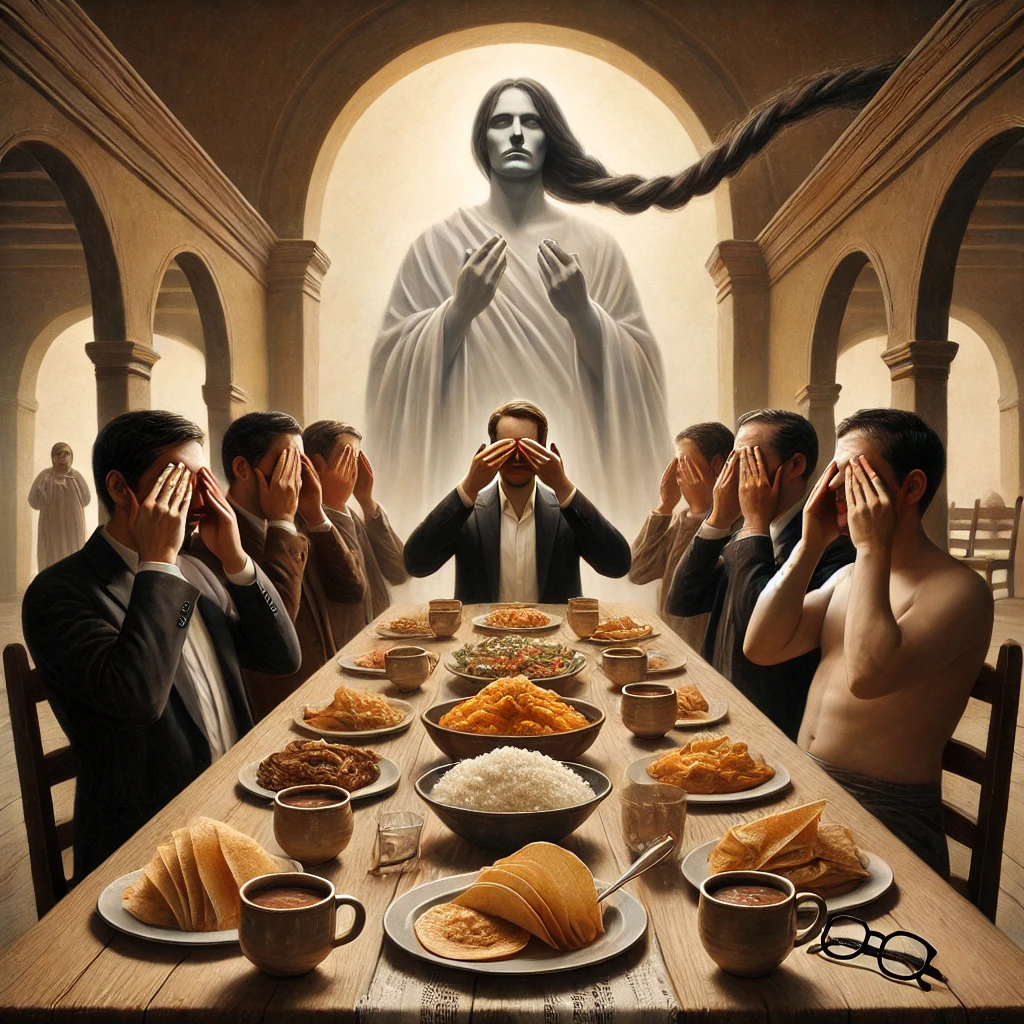
wake up with fingers broken from weaving God’s hair,
two braids, double trinity.
In the temple, ama and I leave our bibles at the end of the bench near the aisle so we can find our seats every Sunday.
Prayers only work if you close your eyes.
I was born with my nana’s lips but this voice is mine only.
It’s not green, white, and red.
It’s not red, white, and blue.
It’s rain in a silver bucket.
At home, the men pluck their eyes out while they eat dinner.
The world would end if we saw them cry.
Mexicans are such hard workers.
Mexicans are such
hard workers.
Mexicans are workers.
Mexicans work.
Mexican, work! Work, Mexican, work!
Mexicans are such hard workers.
They say it like it’s an honor to watch my father die.
About the Author
Anna Flores is a Nogales-born poet whose work delves into the intersections of Diné identity, intersectional feminism, and social justice. A graduate of Arizona State University's MFA program, Flores’s poetry reflects her dedication to cultural expression and activism. For more about her work and journey, read her full bio here.
Summary
Flores takes a familiar stereotype about Mexican labor and progressively strips away its apparently complimentary surface, revealing exploitation, immigration pressure, inherited identity, faith, masculinity, and the human cost borne by the speaker’s father.
Analysis
Repetition is the poem’s primary weapon. “Mexicans are such hard workers” initially resembles praise, but its syntax is gradually dismantled: “Mexicans are workers,” “Mexicans work,” and finally the imperative “Mexican, work!” The progression exposes the coercion hidden inside the compliment. Against that public language, Flores places intensely personal images of her father, nana, ama, prayer and family. Her declaration that she inherited her grandmother’s lips but owns her voice rejects simple national categorization. By the final line, the stereotype has become devastating: admiration for labor is meaningless when it requires watching a person be consumed by that labor.