
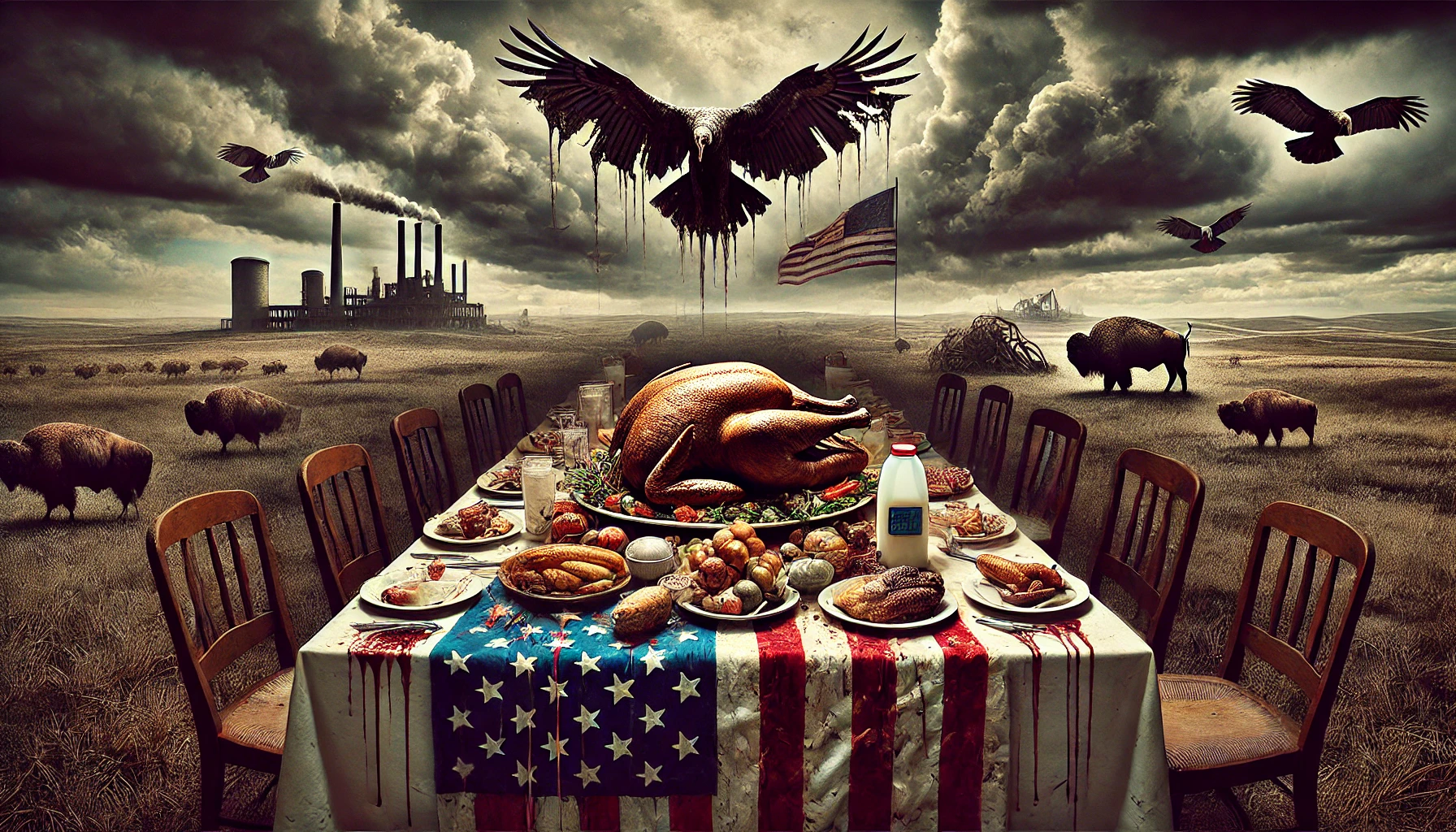
thanksgiving day november 28th, 1986
thanks for the wild turkey and passenger pigeons
destined to be [ ] out through wholesome american guts
thanks for a comment to despoil and poison [Music]
thanks for indians to provide a modicum of challenge and danger
thanks for vast herds of bison to kill and skin leaving the carcasses to rot
thanks for bounties on wolves and coyotes
thanks for the american dream you vulgarize and falsify until the bear lies shine through
thanks for the kkk for [ ] killing long and feed in their notches
thanks for decent church going women with their mean ancient bitter evil faces
[Music]
thanks for killing queer for christ stickers
thanks for laboratory age
[Music]
thanks for prohibition and the war against drugs
[Music]
thanks for a country where nobody is allowed to mind his own business
thanks for a nation of things
yes thanks for all the memories all
right let's see your arms
you always were a headache and you
always were a bore
thanks to the last and greatest betrayal
of the last and greatest
of human dreams
[Music]
you
Transcription from the video "Thanksgiving Prayer" by William S. Burroughs and Vimeo.
About the poet, William S. Burroughs
Arizona plays an unexpected yet significant role in preserving Burroughs’ legacy. The Hayden Library at Arizona State University in Tempe is home to a collection of Burroughs’ papers and manuscripts. Learn more about the William S. Burroughs Collection and his ties to Arizona HERE.
Read more poetry inspired by Arizona HERE.
Summary
Structured as a sarcastic Thanksgiving prayer, the speaker repeatedly offers “thanks” for episodes and institutions associated in the poem with destruction, racism, conformity, prohibition, consumerism and the corruption of the American Dream.
Analysis
The poem’s governing device is inversion. Thanksgiving conventionally invites gratitude, but every new “thanks” makes the word more accusatory. Passenger pigeons, bison, Indigenous people, the KKK, drug prohibition and consumer culture accumulate into an alternative inventory of American history. Because the syntax remains prayer-like while its objects become increasingly grim, repetition converts gratitude into indictment. The line “thanks for a nation of things” condenses the poem’s movement from historical violence toward materialism, while the ending describes the American Dream in the language of betrayal rather than fulfillment.