
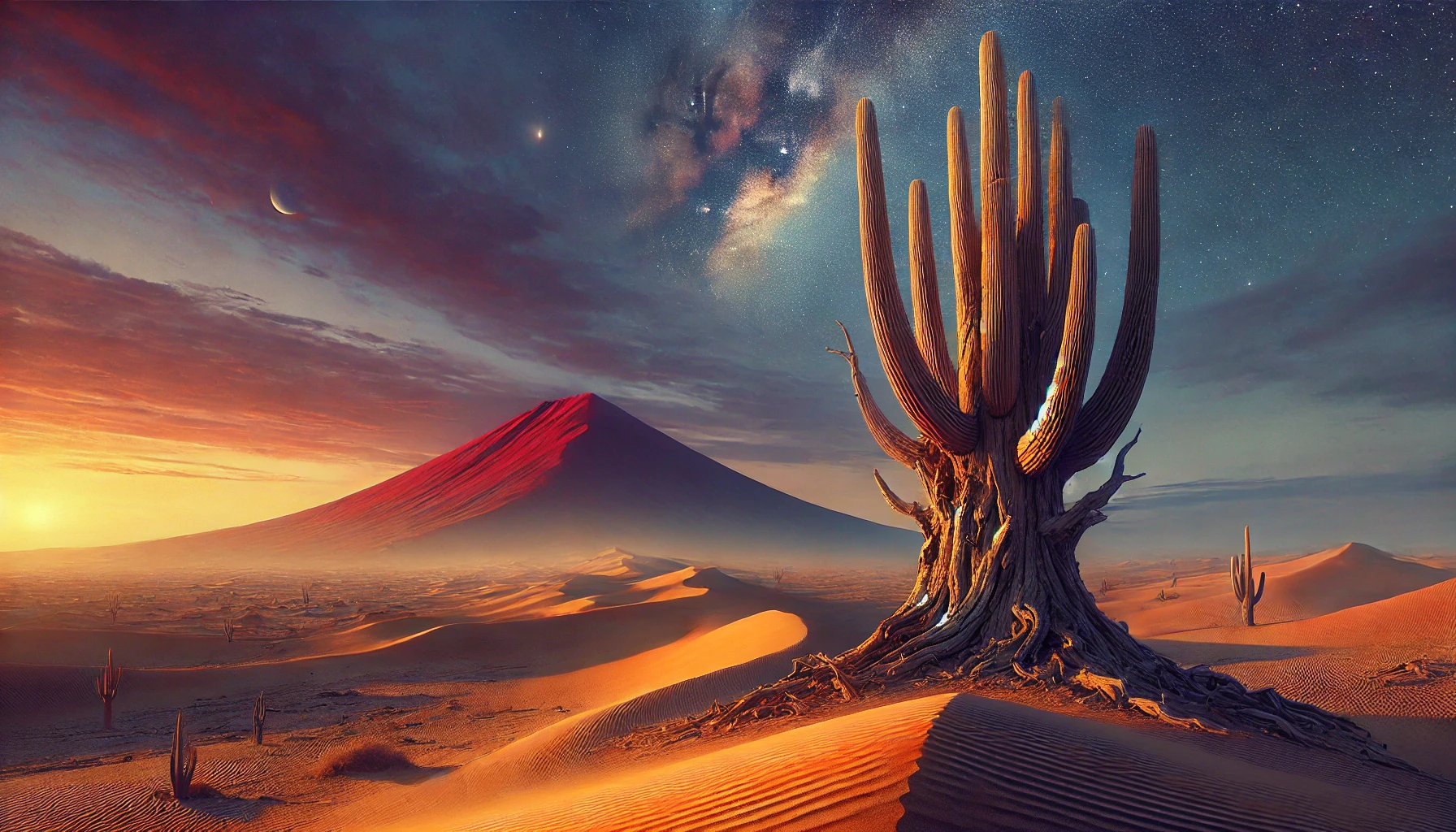
The cactus in the desert stands
Like time’s inviolate sentinel,
Watching the sun-washed waste of sands
Lest they their ancient secrets tell.
And the lost lore of mournful lands
It knows alone and guards too well.
Wiser than Sphynx or pyramid,
It points a stark hand at the sky,
And all the stars alight or hid
It counts as they go rolling by;
And mysteries the gods forbid
Darken its heavy memory.
I asked how old the world was—yea,
And why yon ruddy mountain grew
Out of hell’s fire. By night nor day
It answered not, though all it knew,
But lifted, as it stopped my way,
Its wrinkled fingers toward the blue
Inscrutable and stern and still
It waits the everlasting doom.
Races and years may do their will—
Lo, it will rise above their tomb,
Till the drugged earth has drunk her fill
Of light, and falls asleep in gloom.
About the Author
Harriet Monroe was the publisher of Poetry and frequent letter writer to many influential poetry lovers in the state of Arizona.
Summary
Monroe imagines a giant Arizona cactus as an ancient sentinel that has silently witnessed stars, mountains, civilizations and geological time while refusing to reveal what it knows.
Analysis
The cactus is transformed into an archive older than human history. Comparisons with the Sphinx and pyramids emphasize its longevity, but Monroe goes further: the cactus possesses a “heavy memory” containing mysteries unavailable to people. When the speaker directly asks about the world’s age and the fiery origin of the mountains, the cactus answers only by pointing upward. Its silence becomes authority. Human races and years will disappear, the poem suggests, while this impassive witness continues standing.