

2026
THIS TRAIN
“THIS TRAIN” by Michael C. Ford is a poem centered on music, aging, nature. The poem develops its subject through recurring images and shifts in emotional pressure rather than reducing the experience to a single statement.
Poem archive
Read poems by Arizona and Southwestern writers, plus classic work preserved in the AZPoetry literary archive.
Search by poem title, poet, or a phrase you remember. Each archive page is designed to lead readers toward more poets and related work.
2026
“THIS TRAIN” by Michael C. Ford is a poem centered on music, aging, nature. The poem develops its subject through recurring images and shifts in emotional pressure rather than reducing the experience to a single statement.
2026
“WITH WILL THERE WAS ALWAYS A WAY” by Michael C. Ford is a poem centered on place and geography, memory, love and relationships. Its imagery is anchored in California. The poem develops its subject through recurring images and shifts in emotional pressure rather than reducing the experience to a single statement.

2026
“Uptown World” by Jimmie Ware is a poem centered on place and geography, love and relationships, family. The poem develops its subject through recurring images and shifts in emotional pressure rather than reducing the experience to a single statement.

2026
“Untitled (“Some days I need to be baptized by the beat”)” by Jimmie Ware is a poem centered on love and relationships, music, identity. The poem develops its subject through recurring images and shifts in emotional pressure rather than reducing the experience to a single statement.

2026
“In this Surreal Moment” by Jimmie Ware is a poem centered on love and relationships, family, music. The poem develops its subject through recurring images and shifts in emotional pressure rather than reducing the experience to a single statement.

2026
“UPTOWN” by Jimmie Ware is a poem centered on place and geography, memory, love and relationships. Its imagery is anchored in Chicago, Uptown Chicago. The poem develops its subject through recurring images and shifts in emotional pressure rather than reducing the experience to a single statement.

2026
“Poems 4 Prince” by Jimmie Ware is a poem centered on memory, love and relationships, music. The poem develops its subject through recurring images and shifts in emotional pressure rather than reducing the experience to a single statement.

2026
“Prince Matters” by Jimmie Ware is a poem centered on love and relationships, music, travel and movement. The poem develops its subject through recurring images and shifts in emotional pressure rather than reducing the experience to a single statement.

2026
“Prophets in Paradise” by Jimmie Ware is a poem centered on memory, love and relationships, music. The poem develops its subject through recurring images and shifts in emotional pressure rather than reducing the experience to a single statement.

2026
“Blue Dream” by Jimmie Ware is a poem centered on memory, music, aging. The poem develops its subject through recurring images and shifts in emotional pressure rather than reducing the experience to a single statement.

2026
“Kitchen Conversations” by Jimmie Ware is a poem centered on memory, love and relationships, family. The poem develops its subject through recurring images and shifts in emotional pressure rather than reducing the experience to a single statement.

2026
“I'm Down” by Jimmie Ware is a poem centered on love and relationships, family, music. The poem develops its subject through recurring images and shifts in emotional pressure rather than reducing the experience to a single statement.
2026
“How the Lightning Sings” by Aaron Hopkins-Johnson is a poem centered on arizona, place and geography, memory. The poem develops its subject through recurring images and shifts in emotional pressure rather than reducing the experience to a single statement.
2026
“Epiphany” by Aaron Hopkins-Johnson is a poem centered on love and relationships, family, music. The poem develops its subject through recurring images and shifts in emotional pressure rather than reducing the experience to a single statement.

2026
“Alzheimer’s Poetry Project” by Aaron Hopkins-Johnson is a poem centered on memory, love and relationships, music. The poem develops its subject through recurring images and shifts in emotional pressure rather than reducing the experience to a single statement.

2026
“The Things That Break While Moving” by Aaron Hopkins-Johnson is a poem centered on arizona, place and geography, love and relationships. Its imagery is anchored in Phoenix. The poem develops its subject through recurring images and shifts in emotional pressure rather than reducing the experience to a single statement.

2026
“Damaged Merchandise” by Aaron Hopkins-Johnson is a poem centered on place and geography, memory, music. The poem develops its subject through recurring images and shifts in emotional pressure rather than reducing the experience to a single statement.

2026
“Charlie Brown” by Aaron Hopkins-Johnson is a poem centered on arizona, music, identity. Its imagery is anchored in Phoenix. The poem develops its subject through recurring images and shifts in emotional pressure rather than reducing the experience to a single statement.

2026
“When You Said I Wasn’t Perfect, You Were Right.” by Aaron Hopkins-Johnson is a poem centered on love and relationships, family, music. The poem develops its subject through recurring images and shifts in emotional pressure rather than reducing the experience to a single statement.

2026
“Lefty” by Aaron Hopkins-Johnson is a poem centered on place and geography, love and relationships, family. The poem develops its subject through recurring images and shifts in emotional pressure rather than reducing the experience to a single statement.

2026
“Bananas” by Aaron Hopkins-Johnson is a poem centered on love and relationships, music, mortality and loss. The poem develops its subject through recurring images and shifts in emotional pressure rather than reducing the experience to a single statement.

2026
“A POEM THAT ASKS THE MUSICAL QUESTION: IS JACK KEROUAC REALLY DEAD IN AMERICA?” by Michael C. Ford is a poem centered on place and geography, family, mortality and loss. Its imagery is anchored in California. The poem develops its subject through recurring images and shifts in emotional pressure rather than reducing the experience to a single statement.

2026
“BEAT” by Michael C. Ford is a poem centered on place and geography, music, aging. The poem develops its subject through recurring images and shifts in emotional pressure rather than reducing the experience to a single statement.

2026
“ANOTHER SONG” by Michael C. Ford is a poem centered on place and geography, love and relationships, music. The poem develops its subject through recurring images and shifts in emotional pressure rather than reducing the experience to a single statement.

2026
“I MET HANK IN 1968” by Michael C. Ford is a poem centered on place and geography, memory, family. Its imagery is anchored in Chicago, Los Angeles. The poem develops its subject through recurring images and shifts in emotional pressure rather than reducing the experience to a single statement.

2026
“THE ROCKIES ARE NOT THE ONLY THINGS THAT END IN EL PASO” by Michael C. Ford is a poem centered on place and geography, memory, love and relationships. Its imagery is anchored in El Paso, Mexico. The poem develops its subject through recurring images and shifts in emotional pressure rather than reducing the experience to a single statement.

2026
“BLACK LIGHT” by Michael C. Ford is a poem centered on place and geography, music, social justice. Its imagery is anchored in San Francisco. The poem develops its subject through recurring images and shifts in emotional pressure rather than reducing the experience to a single statement.

2026
“BLUES BOUTS-RIMES TO BILLIE HOLIDAY” by Michael C. Ford is a poem centered on love and relationships, music, mortality and loss. The poem develops its subject through recurring images and shifts in emotional pressure rather than reducing the experience to a single statement.
2026
A transgender speaker imagines a painful confrontation with his identical twin through the mythology of a Western showdown, casting himself as outlaw and his sister as sheriff while pleading for recognition, reconciliation and continued family love.
2026
The speaker imagines an imperfect relationship through playful exchanges, shared identities and inevitable breakdowns, ultimately proposing that if things must fall apart, the two people can at least face that descent together.
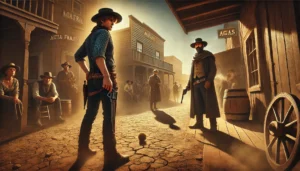
2026
An Arizona Ranger rides into the town of Agua Fria to confront the outlaw Texas Red. Townspeople expect the Ranger to become the outlaw’s twenty-first victim, but their duel ends almost instantly when the Ranger proves faster.
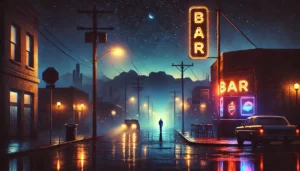
2026
Driving, drinking, crowds and music blur into fragments of a night spent searching for something that remains just out of reach. What survives afterward is not a complete narrative but scattered “pieces of the night.”
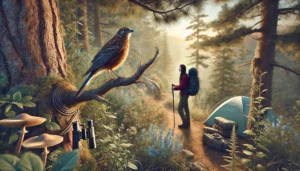
2025
Speaking as a bird, the poem recounts an attraction to a thru-hiker who repeatedly observes but never fully understands him. Their relationship develops through birdsong, nests, field guides, migration and binoculars until incompatibility becomes something the speaker must finally fly away from.
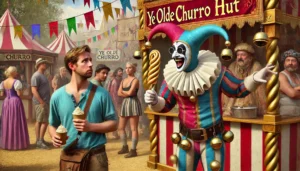
2025
While waiting for a churro at a Renaissance fair, the speaker encounters an aggressively cheerful jester and spirals into an absurdly hostile internal monologue about forced merriment, historical reenactment and Punch and Judy.
2025
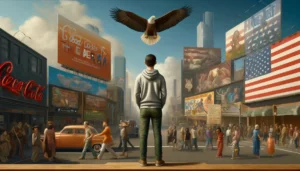
Through a recurring question about whether he counts as American, the speaker contrasts his own beliefs and cultural preferences with conventional symbols and assumptions about patriotism, asking whether criticism and difference exclude someone from national belonging.
2025
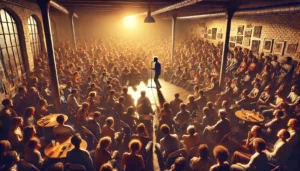
Graham looks back across generations of poetry slam, acknowledging its failures, rivalries, mythology and imperfections while arguing that poems need not transform the entire world to matter deeply to an audience—or even to one poet.
2025
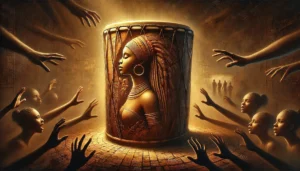
Cortez develops the drum as an extended metaphor for women, repeatedly asking why something capable of voice, rhythm and power is subjected to domination, violence and disrespect.

2025
The speaker celebrates extreme laziness as though it were a competitive achievement, describing an existence organized around sitting, sleeping, snacking and avoiding virtually every reason to get up.
2025
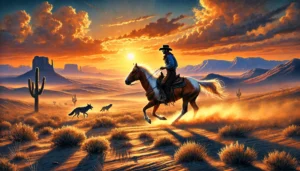
A cowboy rejects urban comforts in favor of horseback life across immense desert ranges, finding freedom in sun, mountains, coyotes and open space and imagining that even heaven should consist of riding a winged horse across the stars.
2025
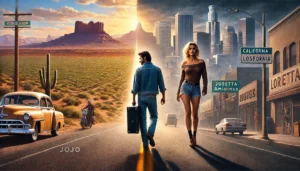
Two characters, Jojo and Loretta, are introduced as people who have moved away from where they supposedly belong, while the recurring refrain repeatedly commands them to “get back.” Jojo’s departure specifically begins in Tucson, Arizona.
2025
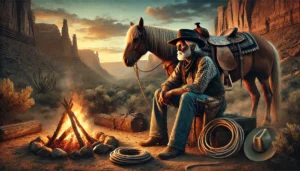
A cowboy mournfully describes an old partner who once embodied everything he admired about working cowboy life—skill with cattle, horses, ropes and practical clothing—before announcing that the man somehow “fell from grace.”
2025
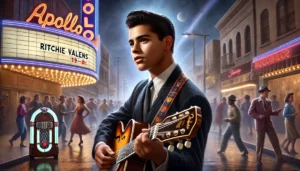
Hepworth addresses Ritchie Valens directly, tracing a young Mexican American musician’s relationship with guitar, his shortened professional name, his rapid rise and early death, while insisting that his music survives attempts to reshape his cultural identity.

2025
Gail takes a long drink of ale, acquires a foamy mustache and then unexpectedly launches into guitar playing powerful enough to make even the gods wail.
2025
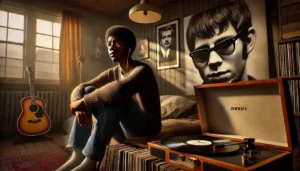
Flemons remembers going to sleep on September 10, 2001 anticipating the release of Bob Dylan’s Love and Theft, only to awaken to September 11. The album becomes inseparable from the collision between an ordinary personal anticipation and an event that abruptly changed the surrounding world.
2025
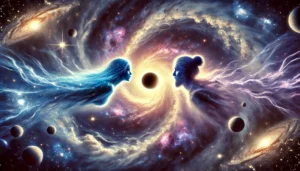
Attraction becomes a cosmic event as the speaker’s heart and mind debate whether to approach someone whose presence seems capable of reorganizing stars, memory, time and space.
2024
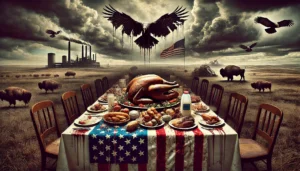
Structured as a sarcastic Thanksgiving prayer, the speaker repeatedly offers “thanks” for episodes and institutions associated in the poem with destruction, racism, conformity, prohibition, consumerism and the corruption of the American Dream.
2024
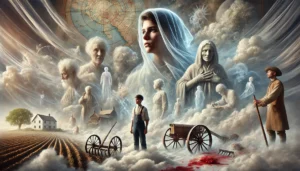
Beginning with a warning from her mother and references to popular music, the speaker considers love, whiteness, American history, Indigenous presence and the desire to be valued by people outside one’s own community.
2024
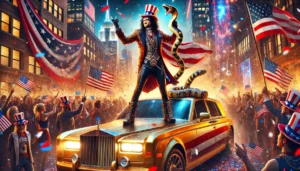
A rock-star persona turns an election campaign into a performance, repeatedly demanding to be elected while mixing patriotic imagery, celebrity swagger, promises and the language of popular entertainment.
2024
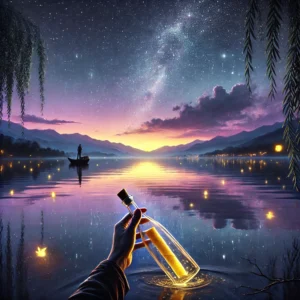
Addressing “Summer” as an intimate presence, Valence moves through childhood memory, injury, aging, love, mortality and survival in a rapid stream of images that treats human connection as shelter against impermanence.
2024
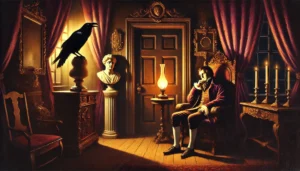
"The Raven" by Edgar Allan Poe Once upon a midnight dreary, while I pondered, weak and weary,Over many a quaint and curious volume of forgotten lore,While I nodded, nearly napping…