

2026
THIS TRAIN
“THIS TRAIN” by Michael C. Ford is a poem centered on music, aging, nature. The poem develops its subject through recurring images and shifts in emotional pressure rather than reducing the experience to a single statement.
Poem archive
Read poems by Arizona and Southwestern writers, plus classic work preserved in the AZPoetry literary archive.
Search by poem title, poet, or a phrase you remember. Each archive page is designed to lead readers toward more poets and related work.
2026
“THIS TRAIN” by Michael C. Ford is a poem centered on music, aging, nature. The poem develops its subject through recurring images and shifts in emotional pressure rather than reducing the experience to a single statement.
2026
“FAILURE TO LEAVE PHOENIX IN ORDER TO SAVE MY LIFE IN THE SUMMER OF 1968” by Michael C. Ford is a poem centered on arizona, place and geography, memory. Its imagery is anchored in Arizona, Tucson. The poem develops its subject through recurring images and shifts in emotional pressure rather than reducing the experience to a single statement.

2026
“WITH WILL THERE WAS ALWAYS A WAY” by Michael C. Ford is a poem centered on place and geography, memory, love and relationships. Its imagery is anchored in California. The poem develops its subject through recurring images and shifts in emotional pressure rather than reducing the experience to a single statement.

2026
“INTRUSION IN SUISUN” by Michael C. Ford is a poem centered on place and geography, mortality and loss, social justice. The poem develops its subject through recurring images and shifts in emotional pressure rather than reducing the experience to a single statement.
2026
“GROUNDING OUT IN SOUTHERN CALIFORNIA” by Michael C. Ford is a poem centered on place and geography, memory, family. Its imagery is anchored in Pasadena, California. The poem develops its subject through recurring images and shifts in emotional pressure rather than reducing the experience to a single statement.
2026
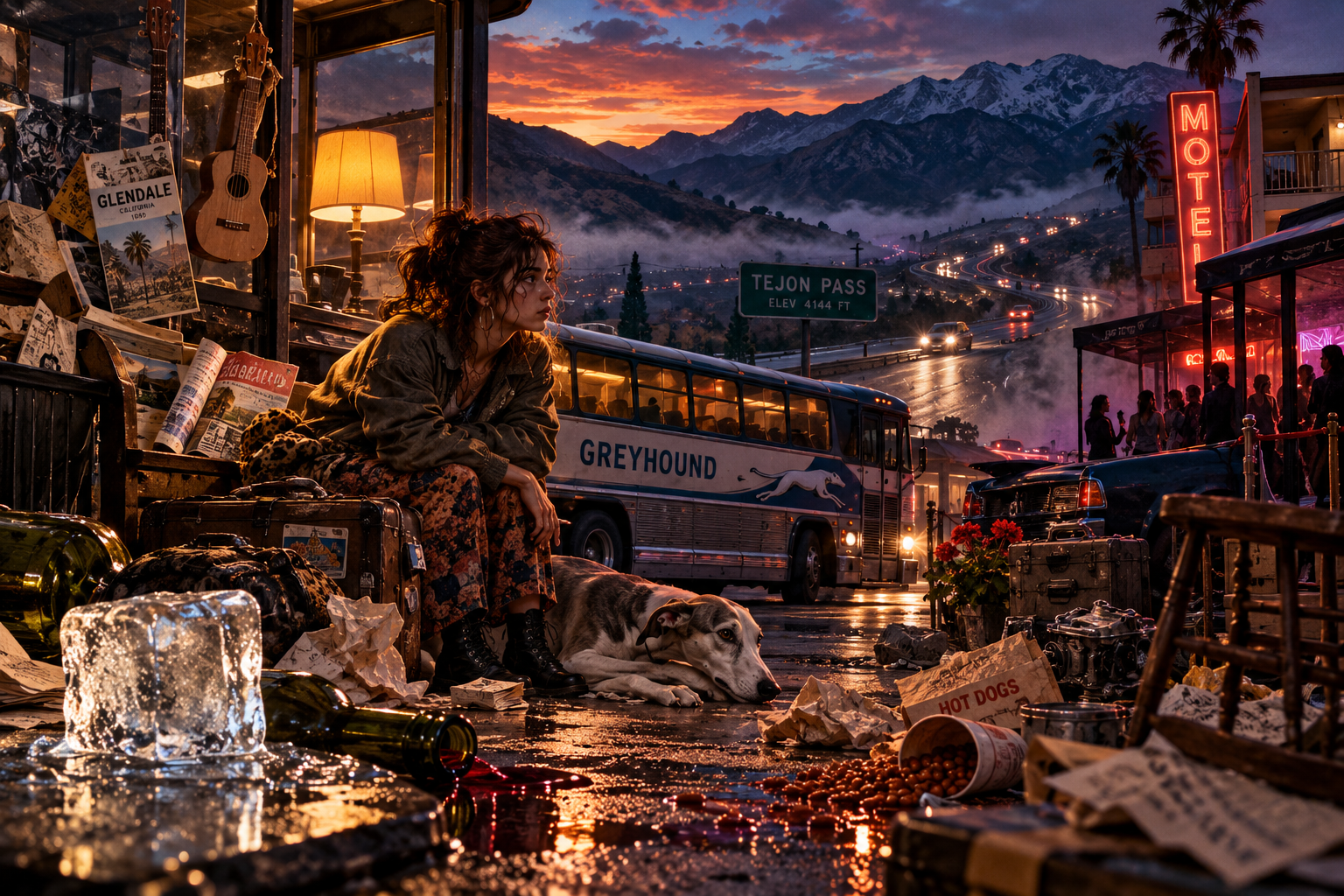
“GREYHOUND” by Michael C. Ford is a poem centered on place and geography, love and relationships, social justice. Its imagery is anchored in California, Glendale, California. The poem develops its subject through recurring images and shifts in emotional pressure rather than reducing the experience to a single statement.

2026
“I'm Going Through” by Jimmie Ware is a poem centered on love and relationships, family, identity. The poem develops its subject through recurring images and shifts in emotional pressure rather than reducing the experience to a single statement.
2026
“50 Deep Breaths” by Jimmie Ware is a poem centered on memory, love and relationships, family. Its imagery is anchored in Arctic Ocean. The poem develops its subject through recurring images and shifts in emotional pressure rather than reducing the experience to a single statement.

2026
“Time” by Jimmie Ware is a poem centered on love and relationships, family, nature. The poem develops its subject through recurring images and shifts in emotional pressure rather than reducing the experience to a single statement.

2026
“Uptown World” by Jimmie Ware is a poem centered on place and geography, love and relationships, family. The poem develops its subject through recurring images and shifts in emotional pressure rather than reducing the experience to a single statement.

2026
“Gentle Reminders” by Jimmie Ware is a poem centered on arizona, family, identity. Its imagery is anchored in Phoenix. The poem develops its subject through recurring images and shifts in emotional pressure rather than reducing the experience to a single statement.
2026
“Yesterday Emotions” by Jimmie Ware is a poem centered on place and geography, memory, nature. Its imagery is anchored in Chicago. The poem develops its subject through recurring images and shifts in emotional pressure rather than reducing the experience to a single statement.

2026
“Untitled (“Some days I need to be baptized by the beat”)” by Jimmie Ware is a poem centered on love and relationships, music, identity. The poem develops its subject through recurring images and shifts in emotional pressure rather than reducing the experience to a single statement.

2026
“Divided States of OZ” by Jimmie Ware is a poem centered on social justice, nature, travel and movement. The poem develops its subject through recurring images and shifts in emotional pressure rather than reducing the experience to a single statement.

2026
“Reigning Men” by Jimmie Ware is a poem centered on place and geography, love and relationships, social justice. The poem develops its subject through recurring images and shifts in emotional pressure rather than reducing the experience to a single statement.

2026
“In this Surreal Moment” by Jimmie Ware is a poem centered on love and relationships, family, music. The poem develops its subject through recurring images and shifts in emotional pressure rather than reducing the experience to a single statement.

2026
“UPTOWN” by Jimmie Ware is a poem centered on place and geography, memory, love and relationships. Its imagery is anchored in Chicago, Uptown Chicago. The poem develops its subject through recurring images and shifts in emotional pressure rather than reducing the experience to a single statement.

2026
“Poems 4 Prince” by Jimmie Ware is a poem centered on memory, love and relationships, music. The poem develops its subject through recurring images and shifts in emotional pressure rather than reducing the experience to a single statement.

2026
“Prince Matters” by Jimmie Ware is a poem centered on love and relationships, music, travel and movement. The poem develops its subject through recurring images and shifts in emotional pressure rather than reducing the experience to a single statement.
2026
“IJS” by Jimmie Ware is a poem centered on place and geography, memory, love and relationships. Its imagery is anchored in Alaska, Lake Michigan. The poem develops its subject through recurring images and shifts in emotional pressure rather than reducing the experience to a single statement.

2026
“Face Book” by Jimmie Ware is a poem centered on social justice, travel and movement. The poem develops its subject through recurring images and shifts in emotional pressure rather than reducing the experience to a single statement.

2026
“Prophets in Paradise” by Jimmie Ware is a poem centered on memory, love and relationships, music. The poem develops its subject through recurring images and shifts in emotional pressure rather than reducing the experience to a single statement.

2026
“Blue Dream” by Jimmie Ware is a poem centered on memory, music, aging. The poem develops its subject through recurring images and shifts in emotional pressure rather than reducing the experience to a single statement.

2026
“Kitchen Conversations” by Jimmie Ware is a poem centered on memory, love and relationships, family. The poem develops its subject through recurring images and shifts in emotional pressure rather than reducing the experience to a single statement.

2026
“I'm Down” by Jimmie Ware is a poem centered on love and relationships, family, music. The poem develops its subject through recurring images and shifts in emotional pressure rather than reducing the experience to a single statement.

2026
“Wonder of Woman” by Jimmie Ware is a poem centered on love and relationships, family, identity. The poem develops its subject through recurring images and shifts in emotional pressure rather than reducing the experience to a single statement.

2026
“Gratitude, For My Griots” by Jimmie Ware is a poem centered on love and relationships, social justice, aging. The poem develops its subject through recurring images and shifts in emotional pressure rather than reducing the experience to a single statement.
2026
“How the Lightning Sings” by Aaron Hopkins-Johnson is a poem centered on arizona, place and geography, memory. The poem develops its subject through recurring images and shifts in emotional pressure rather than reducing the experience to a single statement.
2026
“Epiphany” by Aaron Hopkins-Johnson is a poem centered on love and relationships, family, music. The poem develops its subject through recurring images and shifts in emotional pressure rather than reducing the experience to a single statement.

2026
“jigsaw” by Aaron Hopkins-Johnson is a poem centered on love and relationships. The poem develops its subject through recurring images and shifts in emotional pressure rather than reducing the experience to a single statement.

2026
“Alzheimer’s Poetry Project” by Aaron Hopkins-Johnson is a poem centered on memory, love and relationships, music. The poem develops its subject through recurring images and shifts in emotional pressure rather than reducing the experience to a single statement.

2026
“Chameleon” by Aaron Hopkins-Johnson is a poem centered on identity, aging, nature. The poem develops its subject through recurring images and shifts in emotional pressure rather than reducing the experience to a single statement.

2026
“The Things That Break While Moving” by Aaron Hopkins-Johnson is a poem centered on arizona, place and geography, love and relationships. Its imagery is anchored in Phoenix. The poem develops its subject through recurring images and shifts in emotional pressure rather than reducing the experience to a single statement.
2026
“Astronaut” by Aaron Hopkins-Johnson is a poem centered on memory, love and relationships, family. The poem develops its subject through recurring images and shifts in emotional pressure rather than reducing the experience to a single statement.

2026
“Bad Habit” by Aaron Hopkins-Johnson is a poem centered on contemporary life, human experience. The poem develops its subject through recurring images and shifts in emotional pressure rather than reducing the experience to a single statement.

2026
“Punctuated Lips” by Aaron Hopkins-Johnson is a poem centered on love and relationships, mortality and loss, aging. The poem develops its subject through recurring images and shifts in emotional pressure rather than reducing the experience to a single statement.

2026
“Damaged Merchandise” by Aaron Hopkins-Johnson is a poem centered on place and geography, memory, music. The poem develops its subject through recurring images and shifts in emotional pressure rather than reducing the experience to a single statement.

2026
“Charlie Brown” by Aaron Hopkins-Johnson is a poem centered on arizona, music, identity. Its imagery is anchored in Phoenix. The poem develops its subject through recurring images and shifts in emotional pressure rather than reducing the experience to a single statement.

2026
“When You Said I Wasn’t Perfect, You Were Right.” by Aaron Hopkins-Johnson is a poem centered on love and relationships, family, music. The poem develops its subject through recurring images and shifts in emotional pressure rather than reducing the experience to a single statement.

2026
“Lefty” by Aaron Hopkins-Johnson is a poem centered on place and geography, love and relationships, family. The poem develops its subject through recurring images and shifts in emotional pressure rather than reducing the experience to a single statement.

2026
“Bananas” by Aaron Hopkins-Johnson is a poem centered on love and relationships, music, mortality and loss. The poem develops its subject through recurring images and shifts in emotional pressure rather than reducing the experience to a single statement.

2026
“Burn” by Aaron Hopkins-Johnson is a poem centered on family, identity, aging. The poem develops its subject through recurring images and shifts in emotional pressure rather than reducing the experience to a single statement.
2026
“Life Boat” by Aaron Hopkins-Johnson is a poem centered on family, mortality and loss, social justice. The poem develops its subject through recurring images and shifts in emotional pressure rather than reducing the experience to a single statement.

2026
“A POEM THAT ASKS THE MUSICAL QUESTION: IS JACK KEROUAC REALLY DEAD IN AMERICA?” by Michael C. Ford is a poem centered on place and geography, family, mortality and loss. Its imagery is anchored in California. The poem develops its subject through recurring images and shifts in emotional pressure rather than reducing the experience to a single statement.

2026
“BEAT” by Michael C. Ford is a poem centered on place and geography, music, aging. The poem develops its subject through recurring images and shifts in emotional pressure rather than reducing the experience to a single statement.

2026
“ANOTHER SONG” by Michael C. Ford is a poem centered on place and geography, love and relationships, music. The poem develops its subject through recurring images and shifts in emotional pressure rather than reducing the experience to a single statement.
2026
“THERE WAS A FUNERAL IN SAN PEDRO” by Michael C. Ford is a poem centered on place and geography, memory, mortality and loss. Its imagery is anchored in San Pedro. The poem develops its subject through recurring images and shifts in emotional pressure rather than reducing the experience to a single statement.

2026
“A FEW BARS ON A BAR-ROOM PIANO” by Michael C. Ford is a poem centered on place and geography, love and relationships, family. Its imagery is anchored in Los Angeles, California. The poem develops its subject through recurring images and shifts in emotional pressure rather than reducing the experience to a single statement.

2026
“I MET HANK IN 1968” by Michael C. Ford is a poem centered on place and geography, memory, family. Its imagery is anchored in Chicago, Los Angeles. The poem develops its subject through recurring images and shifts in emotional pressure rather than reducing the experience to a single statement.

2026
“A POEM THAT REFUSES TO BE CALLED DUSK” by Michael C. Ford is a poem centered on place and geography, identity, nature. Its imagery is anchored in San Diego, California. The poem develops its subject through recurring images and shifts in emotional pressure rather than reducing the experience to a single statement.

2026
“CROSS COUNTRY RUNNER” by Michael C. Ford is a poem centered on place and geography, identity, aging. Its imagery is anchored in Santa Fe, Nevada. The poem develops its subject through recurring images and shifts in emotional pressure rather than reducing the experience to a single statement.

2026
“THE ROCKIES ARE NOT THE ONLY THINGS THAT END IN EL PASO” by Michael C. Ford is a poem centered on place and geography, memory, love and relationships. Its imagery is anchored in El Paso, Mexico. The poem develops its subject through recurring images and shifts in emotional pressure rather than reducing the experience to a single statement.
2026
“YESTERDAY I SAW PENELOPE B” by Michael C. Ford is a poem centered on place and geography, love and relationships, mortality and loss. The poem develops its subject through recurring images and shifts in emotional pressure rather than reducing the experience to a single statement.

2026
“IT’S ONLY A DREAM…………………RIGHT?” by Michael C. Ford is a poem centered on nature, travel and movement. Its imagery is anchored in Los Angeles. The poem develops its subject through recurring images and shifts in emotional pressure rather than reducing the experience to a single statement.
2026
“AMNESIA IN MEMORY MANOR” by Michael C. Ford is a poem centered on place and geography, memory, love and relationships. The poem develops its subject through recurring images and shifts in emotional pressure rather than reducing the experience to a single statement.

2026
“INNER BLUES ON THE OUTER DRIVE” by Michael C. Ford is a poem centered on place and geography, memory, family. Its imagery is anchored in Chicago, California. The poem develops its subject through recurring images and shifts in emotional pressure rather than reducing the experience to a single statement.

2026
“SUNRISE HIGHWAY” by Michael C. Ford is a poem centered on place and geography, love and relationships, nature. The poem develops its subject through recurring images and shifts in emotional pressure rather than reducing the experience to a single statement.

2026
“POEM WRITTEN WHILE CONSIDERING POSSIBILITY OF SNOW SHOWERS IN SPANISH FORK CANYON” by Michael C. Ford is a poem centered on aging. The poem develops its subject through recurring images and shifts in emotional pressure rather than reducing the experience to a single statement.

2026
“BLACK LIGHT” by Michael C. Ford is a poem centered on place and geography, music, social justice. Its imagery is anchored in San Francisco. The poem develops its subject through recurring images and shifts in emotional pressure rather than reducing the experience to a single statement.

2026
“DOWN FOR JUNK” by Michael C. Ford is a poem centered on place and geography, aging. Its imagery is anchored in California. The poem develops its subject through recurring images and shifts in emotional pressure rather than reducing the experience to a single statement.

2026
“BLUES BOUTS-RIMES TO BILLIE HOLIDAY” by Michael C. Ford is a poem centered on love and relationships, music, mortality and loss. The poem develops its subject through recurring images and shifts in emotional pressure rather than reducing the experience to a single statement.

2026
“OHIO FEVER” by Michael C. Ford is a poem centered on place and geography, aging. The poem develops its subject through recurring images and shifts in emotional pressure rather than reducing the experience to a single statement.
2026
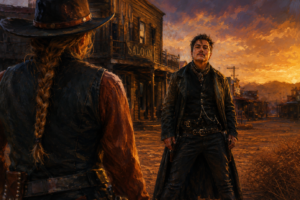
A transgender speaker imagines a painful confrontation with his identical twin through the mythology of a Western showdown, casting himself as outlaw and his sister as sheriff while pleading for recognition, reconciliation and continued family love.
2026
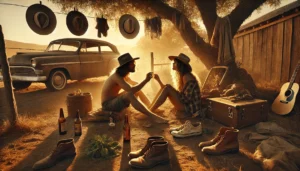
The speaker imagines an imperfect relationship through playful exchanges, shared identities and inevitable breakdowns, ultimately proposing that if things must fall apart, the two people can at least face that descent together.
2026
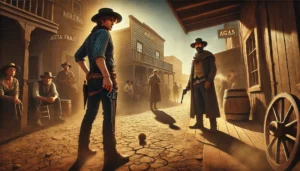
An Arizona Ranger rides into the town of Agua Fria to confront the outlaw Texas Red. Townspeople expect the Ranger to become the outlaw’s twenty-first victim, but their duel ends almost instantly when the Ranger proves faster.
2026
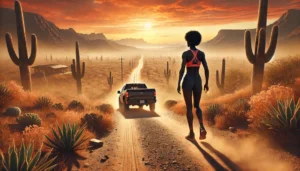
Edwards maps running routes across Arizona onto experiences of race, sexuality, trauma, memory and personal safety. As running changes from sport to vulnerability and eventually survival, “winning” comes to mean making it home and living beyond yesterday.
2026
Driving, drinking, crowds and music blur into fragments of a night spent searching for something that remains just out of reach. What survives afterward is not a complete narrative but scattered “pieces of the night.”

2026
A speaker responds to financial loss by transforming investment language into an increasingly grotesque fantasy of revolt against Wall Street, moving from stock-market frustration into deliberately excessive images of destruction and revenge.

2025
Krampus narrates his forgotten partnership with Santa Claus, remembering a time when the two represented punishment and reward before Christmas became commercialized and even Krampus himself began being transformed into a safe, marketable product.
2025
Speaking as a bird, the poem recounts an attraction to a thru-hiker who repeatedly observes but never fully understands him. Their relationship develops through birdsong, nests, field guides, migration and binoculars until incompatibility becomes something the speaker must finally fly away from.
2025
While waiting for a churro at a Renaissance fair, the speaker encounters an aggressively cheerful jester and spirals into an absurdly hostile internal monologue about forced merriment, historical reenactment and Punch and Judy.
2025
A single sentence captures the ease—and emotional cost—of outwardly agreeing when one’s true answer is no.
2025
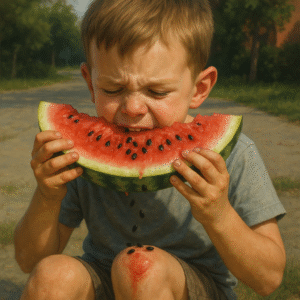
A childhood memory of collecting and spitting watermelon seeds turns unexpectedly into an encounter with bodily injury when the speaker scrapes a knee and looks inside the wound for seeds.
2025
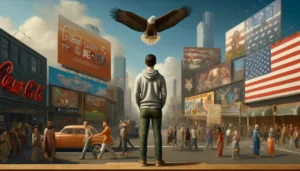
Through a recurring question about whether he counts as American, the speaker contrasts his own beliefs and cultural preferences with conventional symbols and assumptions about patriotism, asking whether criticism and difference exclude someone from national belonging.
2025
A neighborhood experiences floods, deaths, home improvements and ordinary routines together, yet its residents gradually become emotionally isolated even while continuing the gestures of community.
2025
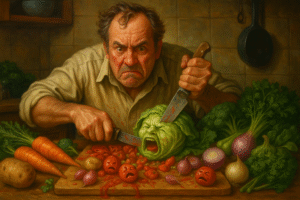
A speaker describes preparing a salad as though committing a gruesome massacre, assigning vegetables pain, fear and victimhood before announcing a campaign for plant rights—and then asking for blue cheese.

2025
The speaker rejects the reassuring idea that something can simply “take the edge off” physical pain because her experience of pregnancy and impending childbirth feels composed entirely of edges—bodily, emotional and psychological.

2025
On entering adulthood, the speaker considers his childhood dream of becoming Batman and discovers that instead of outgrowing it, he wants it even more.
2025
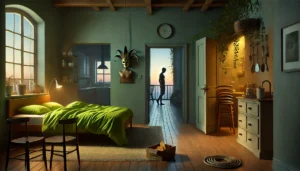
Fourteen numbered passages deliberately blur the language of romantic intimacy, farewell, memory and despair, making it difficult to determine whether each fragment belongs to a love letter or a suicide note.
2025
Graham looks back across generations of poetry slam, acknowledging its failures, rivalries, mythology and imperfections while arguing that poems need not transform the entire world to matter deeply to an audience—or even to one poet.
2025
Cortez develops the drum as an extended metaphor for women, repeatedly asking why something capable of voice, rhythm and power is subjected to domination, violence and disrespect.

2025
The speaker celebrates extreme laziness as though it were a competitive achievement, describing an existence organized around sitting, sleeping, snacking and avoiding virtually every reason to get up.
2025
Shelton observes moon, wind, stones, mountains and a hidden scorpion as participants in an ancient desert order. By remaining in that landscape, the speaker hopes eventually to exchange language for a deeper form of understanding.
2025
Chorlton imagines the desert landscape as a thinking presence whose roads, rocks, animals, shadows and canyons pose questions that exceed ordinary human answers.
2025
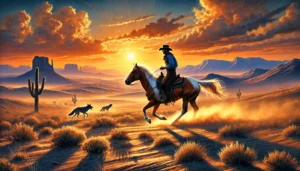
A cowboy rejects urban comforts in favor of horseback life across immense desert ranges, finding freedom in sun, mountains, coyotes and open space and imagining that even heaven should consist of riding a winged horse across the stars.
2025
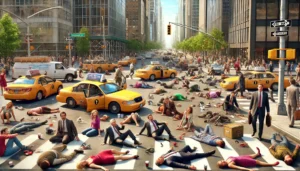
Campana imagines returning to school to invent a bomb that kills nobody and merely knocks everyone in the world onto their backside, replacing mass destruction with a shared moment of ridiculousness.
2025
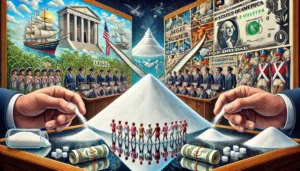
Naughty A. Mouse repeatedly compares sugar with illegal drugs in order to connect an ordinary consumer product to histories of slavery, colonial trade, violence, profit and unequal definitions of criminality.
2025
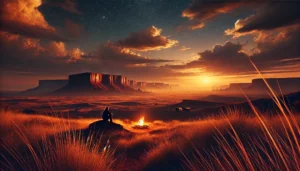
Alone beneath western stars, the speaker asks the gentle mesa wind to carry kisses and memories to an absent woman. The surrounding landscape becomes a messenger for longing that cannot otherwise reach her.
2025
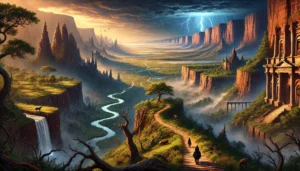
Abbey offers an unconventional blessing: may the reader encounter crooked trails, dangerous journeys, endless rivers, wild forests, red-rock deserts, storms, canyons and ultimately something more wondrous than imagination can predict.
2025
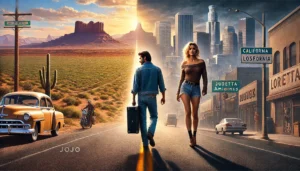
Two characters, Jojo and Loretta, are introduced as people who have moved away from where they supposedly belong, while the recurring refrain repeatedly commands them to “get back.” Jojo’s departure specifically begins in Tucson, Arizona.
2025
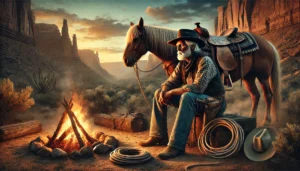
A cowboy mournfully describes an old partner who once embodied everything he admired about working cowboy life—skill with cattle, horses, ropes and practical clothing—before announcing that the man somehow “fell from grace.”
2025
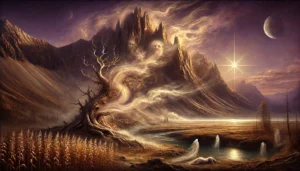
Bitsui moves through a rapidly transforming landscape of mountains, wind, reservation ghosts, uranium water, digital clouds, family, maps and dissolving bodies, creating a world in which environmental, technological and human boundaries continually collapse into one another.
2025
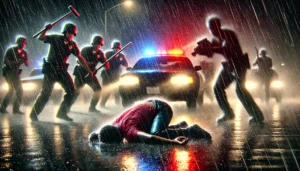
Daniels revisits the beating of Rodney King and the speaker’s memory of encountering its images, using the recurring word “swing” and the number 56 to confront police violence, race, public witnessing and the persistence of the event decades later.
2025
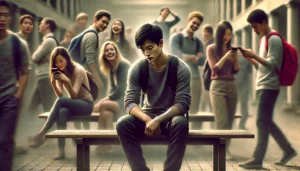
The speaker addresses a young person being bullied and urges him not to mistake other people’s cruelty for a truthful description of who he is. Drawing on his own experience, the speaker presents survival as evidence that the victim’s future can exceed the identities imposed on him.
2025
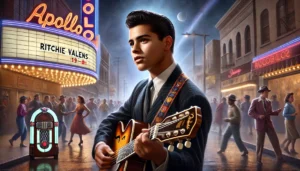
Hepworth addresses Ritchie Valens directly, tracing a young Mexican American musician’s relationship with guitar, his shortened professional name, his rapid rise and early death, while insisting that his music survives attempts to reshape his cultural identity.
2025
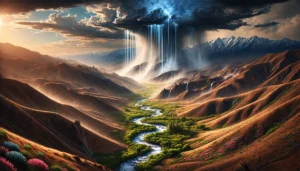
After a long, smoldering summer, thunder brings rain from the mountains into the gullies and valleys. The speaker experiences the storm as both ecological renewal and personal comfort.
2025
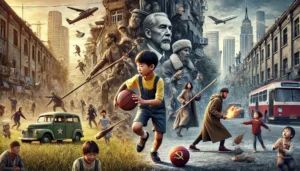
Mabrey imagines revolution as a nearly imperceptible force moving through ordinary moments across history: a Vietnamese boy carrying shoes through gunfire, a child unknowingly playing with a fragment connected to racial violence, and a girl rescuing a book from a military fire.
2025
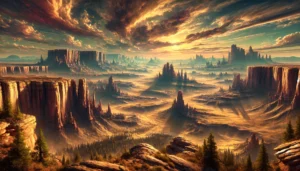
Urmy condenses Arizona into four monumental images: mesas and rock spires, canyons and heat, immense open spaces, and a silence that seems to preserve the land’s secrets.
2025
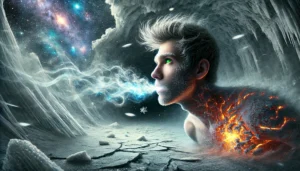
Trapped motionless in an increasingly cold and claustrophobic room, the speaker experiences cosmic visions, violent wind and bodily paralysis before warmth returns, fire overtakes the body and the seemingly defeated speaker finally sits up.

2025
Gail takes a long drink of ale, acquires a foamy mustache and then unexpectedly launches into guitar playing powerful enough to make even the gods wail.
2025
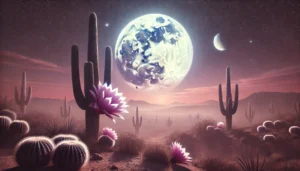
Moonlight transforms the Arizona desert into a quiet, dreamlike world where the moon resembles a snowflake, cacti become guardians, and night unfolds like a desert lily.
2025
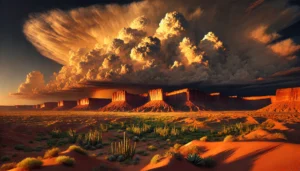
A desert thunderstorm advances across sunlit mesas, darkens the canyon and erupts into a torrent that floods the canyon floor.
2025
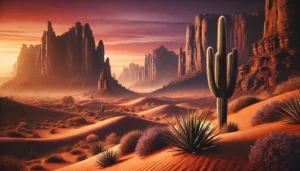
Hall presents the Sonoran Desert as a place governed by elemental powers: cactus, yucca, rock, sand, silence, stars, legends, and spirits. The landscape is not merely scenery; it holds memory and mystery.

2025
Fox mimics the nonstop velocity of satellite sports television, combining multiple sports, announcer language and advertising until athletic competition, consumer products and television spectacle become one continuous broadcast.
2025
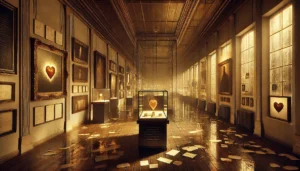
The speaker imagines her heart as an enormous public gallery filled with love letters, memories, damaged rooms, apologies, past relationships and one especially painful exhibit that continues to occupy the largest space.
2025
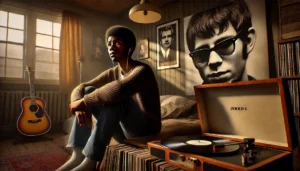
Flemons remembers going to sleep on September 10, 2001 anticipating the release of Bob Dylan’s Love and Theft, only to awaken to September 11. The album becomes inseparable from the collision between an ordinary personal anticipation and an event that abruptly changed the surrounding world.

2025
Missing someone causes the speaker to see a heart in a cloud—but not the polished symbol of greeting cards. Instead, he imagines an actual human heart: messy, vulnerable, compassionate and ultimately impossible for poetry to fully capture.
2025
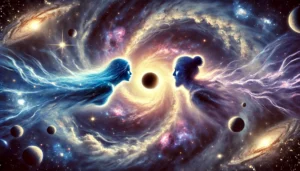
Attraction becomes a cosmic event as the speaker’s heart and mind debate whether to approach someone whose presence seems capable of reorganizing stars, memory, time and space.
2025
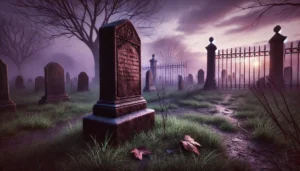
The speaker remembers seeing his parents’ shared grave marker twice—once for each funeral—and confronts the strange contradiction between memory, which proves they lived, and stone, which confirms they are gone.
2025
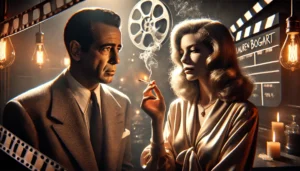
Speaking in the imagined voice of Lauren Bacall to Humphrey Bogart, the poem revisits their screen partnership, marriage, aging and Bogart’s death through the language of movies, scripts, cigarettes and Hollywood romance.
2025
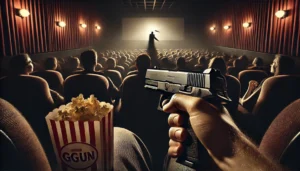
In six short lines, Orion takes the familiar annoyance of someone texting during a movie and escalates the response into an absurd instruction involving silenced handguns.
2024
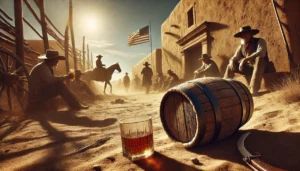
Set at the Presidio of Tucson in May 1856, the poem depicts Chiricahuas being sold a barrel of whiskey near the Santa Cruz, presenting alcohol as both commodity and instrument within a violent frontier encounter.
2024
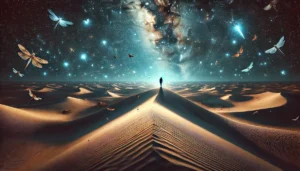
On a cold Arizona morning, the speaker imagines the apparently silent stars as an enormous working machine whose unheard energy continues through birds, insects and other creatures while humans sleepily enter an ordinary Monday.
2024
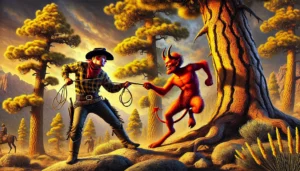
Two rowdy cowboys encounter the Devil, capture him with their ropes, brand him, knot his tail and send him away defeated in an exaggerated Western tall tale.
2024
Grey defines greatness not through fame or achievement but through the ability to endure loss, defeat, grief, anger and despair while continuing to choose love and faith in what may still come.
2024
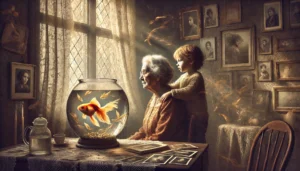
The speaker compares her grandmother’s dementia with the supposed short memory of a goldfish, moving through repeated introductions, frustration, grief, fear and love as both women become trapped in different kinds of forgetting.
2024
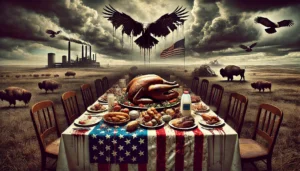
Structured as a sarcastic Thanksgiving prayer, the speaker repeatedly offers “thanks” for episodes and institutions associated in the poem with destruction, racism, conformity, prohibition, consumerism and the corruption of the American Dream.
2024
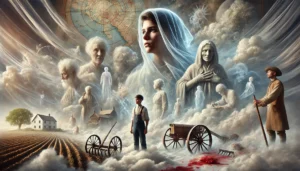
Beginning with a warning from her mother and references to popular music, the speaker considers love, whiteness, American history, Indigenous presence and the desire to be valued by people outside one’s own community.
2024
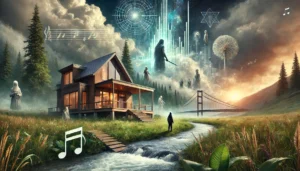
Addressing a young person, Ríos imagines every individual as carrying generations of ancestors into the present and encourages the listener to use that inheritance to build a future of their own.
2024
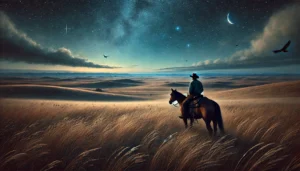
A cowboy prays beneath the stars, finding God more readily in open plains, wind, horses and honest work than inside churches. He asks not for comfort or wealth but for freedom, generosity, integrity and guidance along life’s final trail.
2024
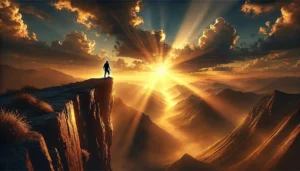
The speaker delivers a compact set of instructions for living boldly: take opportunities, work when nobody is watching, acknowledge mistakes, risk failure, recover from falling and continue forward.

2024
A rock-star persona turns an election campaign into a performance, repeatedly demanding to be elected while mixing patriotic imagery, celebrity swagger, promises and the language of popular entertainment.

2024
The Klute adopts the voice of a fictional Republican hip-hop performer and piles political references, slogans and caricatures into a satirical campaign performance modeled on rap and political advertising.

2024
A birthday casserole made by the speaker’s mother becomes a measure of time. What began as a childhood treat gradually accumulates associations with aging, nostalgia, changing tastes, and the enduring rituals through which family love is expressed.

2024
Addressing “Summer” as an intimate presence, Valence moves through childhood memory, injury, aging, love, mortality and survival in a rapid stream of images that treats human connection as shelter against impermanence.
2024
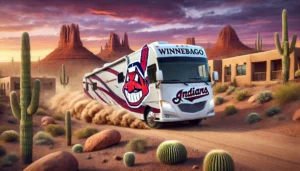
Shebala uses the language of sports fandom, commercial imagery and stereotypes to confront the contradiction between professed admiration for Indigenous people and the reduction of Indigenous identities to mascots, costumes, products and caricatures.
2024
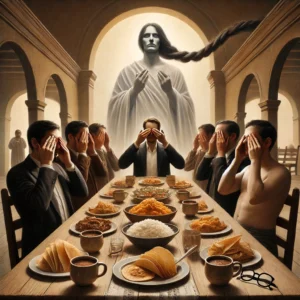
Flores takes a familiar stereotype about Mexican labor and progressively strips away its apparently complimentary surface, revealing exploitation, immigration pressure, inherited identity, faith, masculinity, and the human cost borne by the speaker’s father.
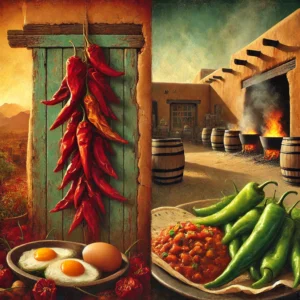
2024
Baca contrasts his preference for red chile with his grandmother’s devotion to green chile, transforming food preparation into a sensual family ritual connected to New Mexico’s landscape, labor, memory, and culture.
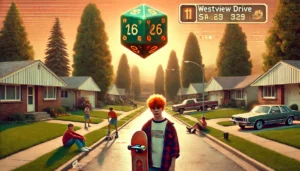
2024
Cooper imagines growing up as an unforgiving video game called Outside. Childhood embarrassment, heartbreak, economic frustration, and generational conflict become failed dice rolls, impossible levels, fatalities, cheat codes, and eventually an invitation to rewrite the game.
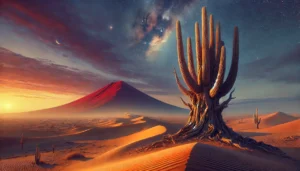
2024
Monroe imagines a giant Arizona cactus as an ancient sentinel that has silently witnessed stars, mountains, civilizations and geological time while refusing to reveal what it knows.
2024
Foley offers a celebratory toast to Arizona through a catalog of its defining images: cactus, sun, cowboys, copper, agriculture, mountains, mesas, tourists, and heat.
2024
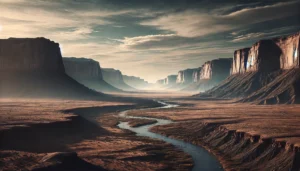
An empty Southwestern landscape is defined by absence: silent rivers, bare mesas, shadowed peaks, and wind carrying neither footsteps nor names.
2024
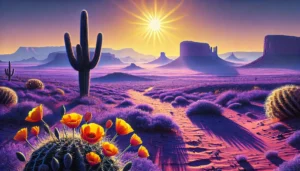
Wortley presents the Arizona desert through contrasts: fierce sunlight and purple shadow, silent mountains and calling mesas, harsh aridity and brilliantly blooming cactus and poppies.
2025
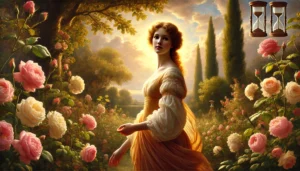
"Sonnet 18" by William Shakespeare Shall I compare thee to a summer’s day?Thou art more lovely and more temperate:Rough winds do shake the darling buds of May,And summer’s lease h…
2025
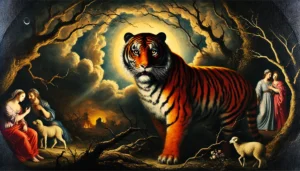
"The Tiger" by William Blake Tiger Tiger, burning bright,In the forests of the night;What immortal hand or eye,Could frame thy fearful symmetry? In what distant deeps or skies.Bur…
2025
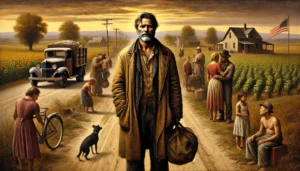
"The Men Who Don't Fit In" by Robert Service There’s a race of men that don’t fit in,A race that can’t stay still;So they break the hearts of kith and kin,And they roam the world…
2025
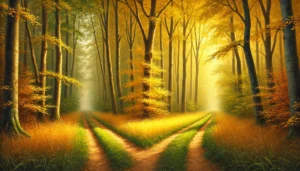
"The Road Not Taken" by Robert Frost Two roads diverged in a yellow wood,And sorry I could not travel bothAnd be one traveler, long I stoodAnd looked down one as far as I couldTo…
2025
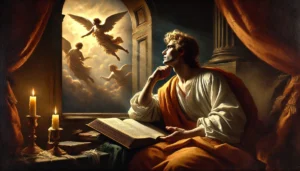
"On His Blindness" or also known as "When I Consider How My Light Is Spent" John Milton, published in 1673 When I consider how my light is spentEre half my days in this dark world…
2024
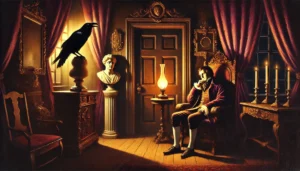
"The Raven" by Edgar Allan Poe Once upon a midnight dreary, while I pondered, weak and weary,Over many a quaint and curious volume of forgotten lore,While I nodded, nearly napping…